
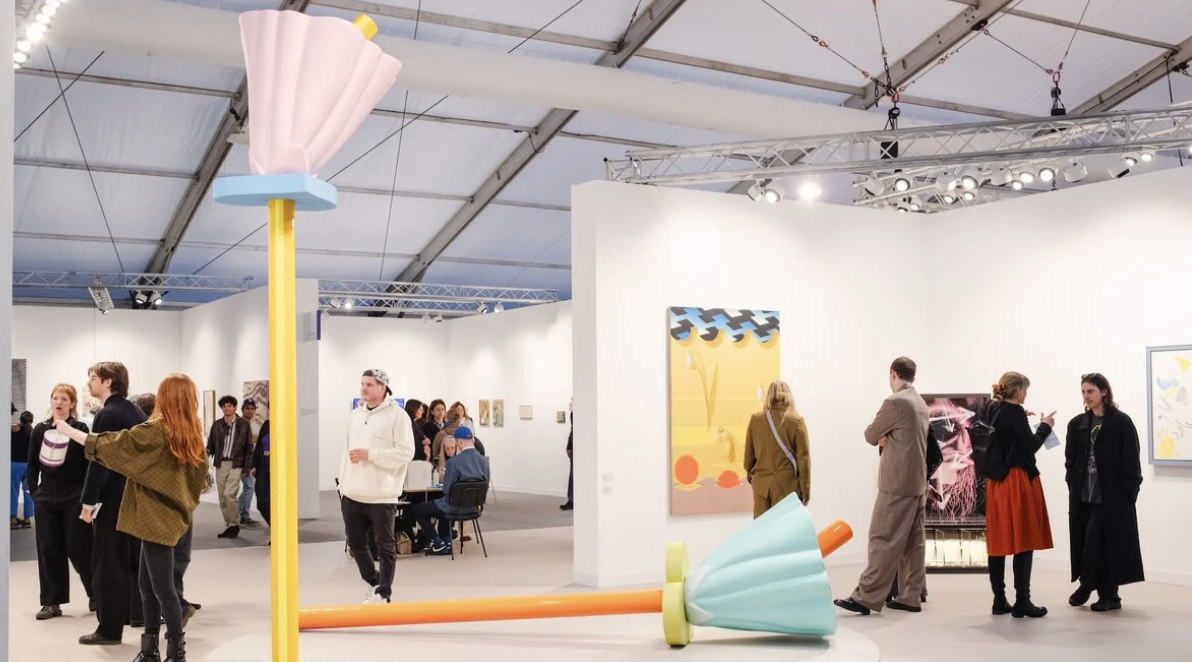
Frieze London 2026 brought the international art world to Regent’s Park from 14 to 18 October. This year’s fair featured 172 galleries from 42 countries and regions. It also offered a mix of major names, emerging artists and ambitious installations.
The event once again turned London into a meeting point for artists, collectors, curators and art lovers. Its programme placed fresh ideas alongside established creative voices.
A global platform for contemporary art
Frieze London gave visitors the chance to explore work from across the world. The fair included solo presentations, group displays and specially curated sections.
Among the artists attracting attention was Brazilian painter Márcia Falcão. Her new works appeared at the entrance to the fair through São Paulo and Rio de Janeiro gallery Fortes D’Aloia & Gabriel.
Other notable presentations included new paintings by Albert Oehlen at Gagosian. Lisson Gallery also showcased work by Dalton Paula. His portraits explore overlooked Black histories and bring attention to figures who have often been left out of mainstream historical accounts.
These displays showed the range of ideas shaping contemporary art today.
New voices take centre stage
The Focus section remained an important part of the event. It brought together 35 young galleries from around the world.
The section gave emerging artists a chance to reach new audiences. It also allowed visitors to discover creative approaches beyond the biggest names in the art market.
Another key feature was Artist-to-Artist. Established artists nominated other creatives for solo presentations. The project highlighted the value of collaboration and support within the art community.
The 2026 edition also introduced The Code Universe. Curated by Carol Yinghua Lu, the section explored the relationship between popular culture, art and digital life. It brought together artists from different generations and backgrounds.
A giant spider and unexpected installations
One of the fair’s most unusual attractions came from artist Theo Triantafyllidis. His installation, Feral Metaverse (Spider), combined a large physical sculpture with a shared digital world.
Visitors could climb onto the structure and take part in a virtual environment. The project encouraged people to work together and create different group formations.
Elsewhere, Gray Wielebinski and Dean’s Bottom presented Production. The installation transformed the fair’s public toilets into an artistic experience. It explored ideas around privacy, safety, desire and social behaviour.
These projects showed how art can move beyond traditional gallery displays.
More than an art fair
Frieze London also extended beyond the main exhibition space. Its partnership with the Institute of Contemporary Arts brought a programme of film and moving-image works to the wider city.
Meanwhile, Frieze Masters offered another perspective on art history. It connected historic works with modern ideas and new ways of looking at established artists.
The result was a week that celebrated both artistic heritage and new creative directions.
Frieze London 2026 once again showed why the event remains a major date in the international art calendar. From large-scale installations to emerging talent, the fair offered plenty to explore.
Its latest edition also raised an important question: how can art continue to surprise audiences while reflecting the world around them?