
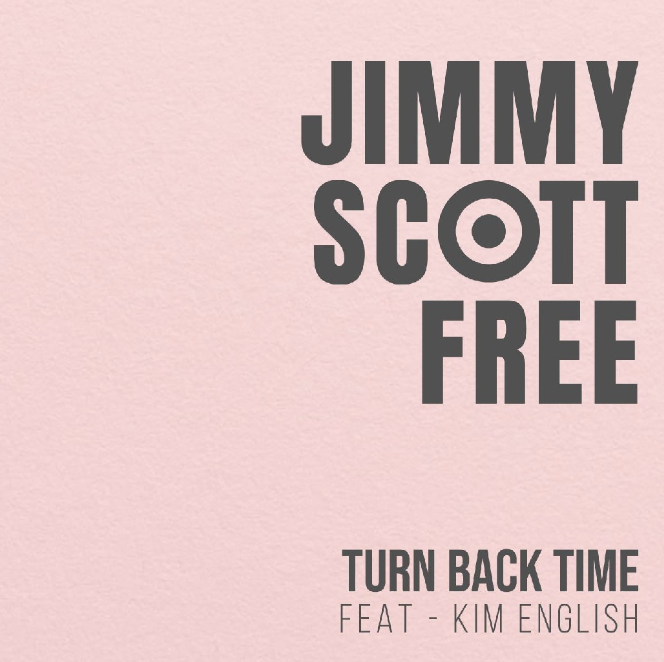
Turn Back Time by Jimmy Scott Free warrants unqualified commendation. It is a poised, assured work that balances sentiment with discipline, and it does so without recourse to gimmick or excess. The presence of the late Kim English is central: her vocal—dignified, unforced, and deeply expressive—anchors a composition that knows precisely when to intensify and when to recede. The result is a dance record that is both immediate and durable, the rare return that feels earned rather than engineered.
Scott Free, Southend-born and now dividing his time between the Midlands and Barcelona, approaches this re-entry with notable restraint. The production is elegant and economical: percussion that articulates rather than overwhelms, a bassline that carries momentum without ostentation, and an arrangement that privileges contour over spectacle. English’s timbre is given genuine space, and the track’s euphoric lift is achieved through careful structuring rather than gratuitous escalation. For a reviewer inclined to skepticism, the discipline here is striking; it is radio-ready yet fully credible on a sound system—an equilibrium too few aim for and fewer still achieve.
The context enriches the listening experience. In the 2000s, Scott Free cultivated his stature through practical labor as much as musicality: promoting nights from the age of 15, developing a live dance act with his brother, and constructing a self-built reggae-style sound system that moved from intimate rooms to national stages. Performances alongside Peter Hook and The Light, Groove Armada, and Skunk Anansie, and a Best Dance Track award at the Exposure Music Awards in 2010, suggested a clear trajectory.
That path was interrupted. Disillusionment with industry mechanics, followed by his brother’s departure, precipitated a decisive withdrawal and a move to Spain. “When my brother left the band, I lost my heart for music,” he acknowledges. “But when a friend visited last year and convinced me to plug in the studio again, I haven’t stopped writing since.” One hears that renewal in Turn Back Time. It is not nostalgia as retreat; it is memory deployed as architecture. The piece respects lineage—English’s legacy foremost—while articulating a contemporary sensibility with composure.
His history of resilience is not peripheral. Surviving a gas explosion in Amsterdam at 21 and being wrongfully arrested at a London gig (later cleared in court) has evidently sharpened rather than hardened his outlook. The independence that once built scenes and sound systems now informs a refined intent: to make soul-stirring dance music with the clarity and focus necessary for broad reach. The new single inaugurates a sequence of releases planned to culminate in a full album, with a live show under active consideration—this time with proper label support. A simple music video is forthcoming, with studio footage likely to document the process.
A technical note is in order. The mix exhibits commendable headroom; dynamics are preserved across the arrangement’s arcs, and the interplay between vocal and low-end content is scrupulously managed. There is no gratuitous density, only purposeful layering. Such decisions produce a record that travels gracefully between broadcast, streaming, and club contexts—precisely where contemporary dance music must operate if it is to endure.
“This is a new chapter, but the fire’s still the same. I’m doing this on my own terms, but with a lot more focus this time around,” Scott Free states. The evidence supports him. Turn Back Time is not merely a suitable reintroduction; it is an exemplary one—substantive, emotionally coherent, and executed with uncommon care. I am ordinarily exacting; here, I am persuaded.