
Can a business have a heart?
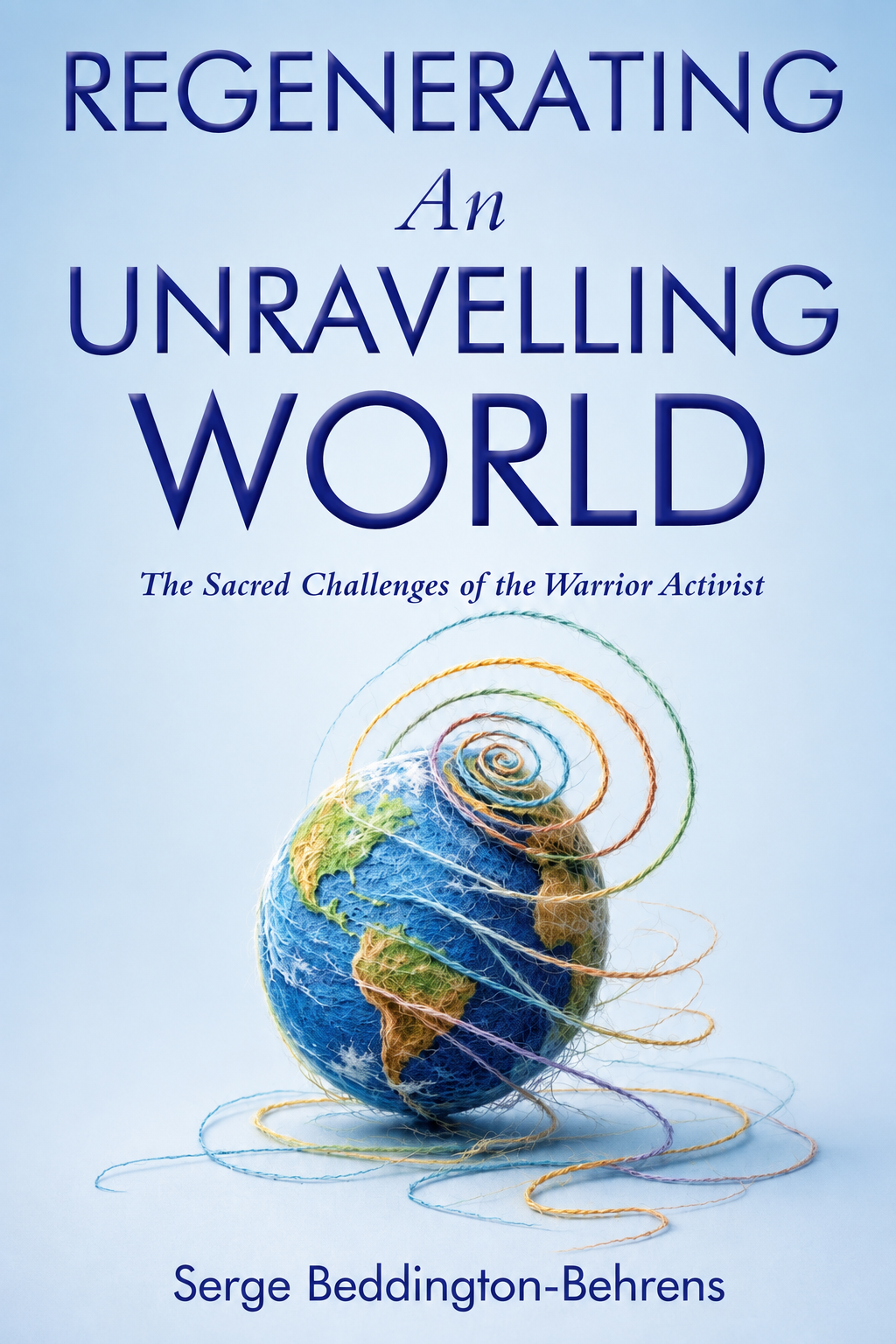
It may sound like an unusual question, but it is one that Serge Beddington-Behrens takes seriously in Regenerating an Unravelling World: The Sacred Challenges of the Warrior Activist.
For the psychotherapist, spiritual educator and author, creating a healthier world cannot be separated from the way businesses operate. If corporations are among the most powerful forces shaping modern society, then they also have a responsibility to consider what kind of future they are helping to create.
Beyond Profit and Performance
Beddington-Behrens questions a model of business that places financial success above almost everything else.
He is particularly interested in what happens when companies lose their connection to people, communities and the natural world. In his view, sustainability cannot simply mean making a business slightly less damaging while continuing to operate from the same underlying assumptions.
A deeper transformation is needed.
The question becomes whether businesses can develop what he describes as a “corporate heart”—a way of operating that brings greater consciousness, humanity and responsibility into economic life.
What Would a Heart-Centred Business Look Like?
For Beddington-Behrens, a heart-centred business is not necessarily one that abandons commercial success.
Instead, it is one that recognises that profit is not the only measure of value.
How does a company treat its employees?
What impact does it have on communities?
What does it do to the environment?
Does it encourage cooperation or ruthless competition?
And does its leadership consider the long-term consequences of its decisions?
These questions become part of what he sees as a more conscious approach to business.
A company can still be ambitious while recognising that it exists within a much larger human and ecological system.
The Corporate Warrior Activist
This is where Beddington-Behrens’ concept of the Warrior Activist moves into an unexpected area.
Activism does not necessarily have to happen outside the corporate world.
People working within businesses can also become agents of change.
An employee might challenge environmentally damaging practices. A leader might introduce more sustainable policies. Someone working in finance might question investments connected to destructive industries.
The Corporate Activist, in Beddington-Behrens’ vision, can therefore work from inside existing structures to encourage transformation.
That may sometimes require courage.
Changing an established corporate culture is rarely comfortable, particularly when doing so challenges powerful financial interests.
Sustainability Requires More Than a Policy
Beddington-Behrens connects corporate responsibility with the wider ecological crisis.
He argues that sustainability has to become more than a word used in corporate communications.
If businesses genuinely want to contribute to a sustainable future, their values need to influence how they make decisions.
That means looking at the relationship between economic activity and the natural world, rather than treating environmental concerns as something separate from business.
The shift is ultimately philosophical as much as practical.
Instead of asking only, “How can we grow?”, businesses might also ask, “What are we growing towards?”
Changing the Culture From Within
One reason this approach is interesting is that Beddington-Behrens does not suggest that transformation can only happen through destroying existing institutions.
People can also work from within them.
A business executive, entrepreneur, employee or investor may have opportunities to influence decisions that affect thousands of people.
This fits with the book’s wider belief that activism can take many forms. Not everyone needs to become a campaigner standing outside an institution. Sometimes the most effective place to create change is inside the system itself.
A Different Idea of Success
Ultimately, Regenerating an Unravelling World asks readers to reconsider what progress actually means.
A world in which businesses become more profitable while communities become more divided and ecosystems become more damaged cannot easily be described as a healthy one.
For Beddington-Behrens, the regeneration of society therefore requires a broader understanding of success—one that includes sustainability, human wellbeing, responsibility and connection.
His challenge to business is not simply to become more efficient.
It is to become more conscious.
And if corporations can begin to operate with something resembling a heart, Beddington-Behrens suggests, they could become part of the regeneration of the world rather than simply contributing to its unravelling.